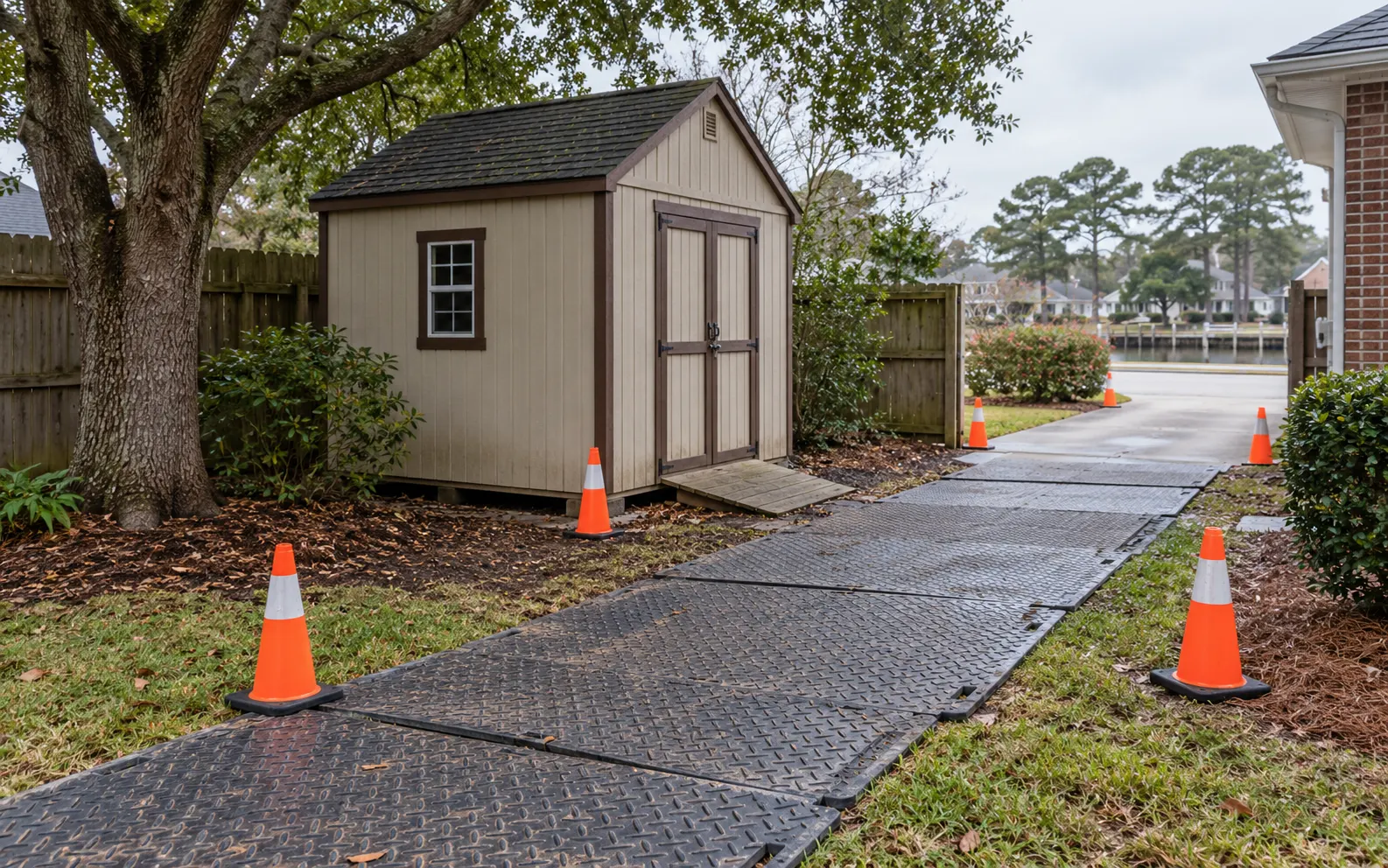
Measure the path as carefully as the shed. The narrowest gate, tightest turn, weakest surface, and longest carry often determine how material leaves the yard.
Walk the route from shed to street
Start at the shed door and follow the route to the likely loading point. Note fences, steps, air-conditioning units, low branches, decks, irrigation heads, garden beds, gates that do not open fully, and soft areas that may not support repeated foot traffic.
Access measurement sheet
- Narrowest clear gate opening
- Overhead clearance below branches and wires
- Number of steps and sharp turns
- Distance from shed to loading point
- Surface type: grass, gravel, pavers, concrete, or slope
- Parking, alley, curb, and HOA restrictions
Protect the route
Ask what surface protection is appropriate for the site. Protective mats can help on some routes, but they do not make every wet, steep, or unstable surface safe. Keep sprinklers off before the appointment if soft ground may be a concern.
Make property boundaries clear
Identify shared fences, neighbor access, and any area the crew should not enter. Obtain permission before planning to use property that is not yours.